0
Cart
-
Car fit guarantee on every model
-
Free deliveries over 100€*
-
365 day returns
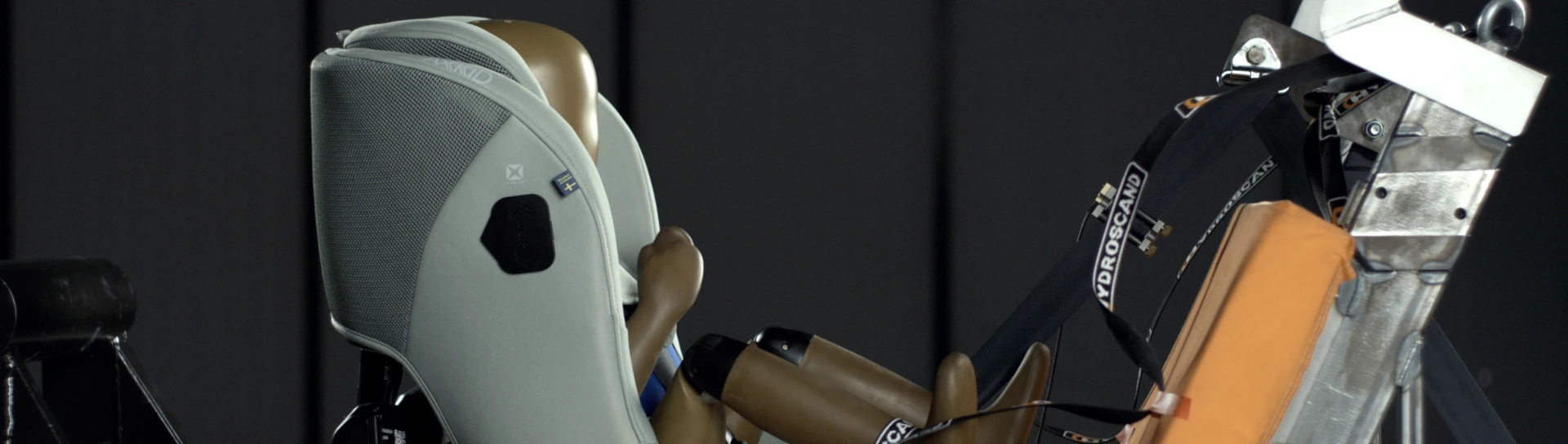
Not all seats are equal, and ADAC proves it. The ADAC child car seat test, conducted together with Stiftung Warentest (STIWA), is Europe’s most rigorous independent crash test for child car seats. Every year, the organisations evaluate safety, usability, ergonomics, and material safety to ensure that no harmful substances occur in products designed for children.
Axkid car seats consistently rank among the safest in ADAC tests, reflecting our commitment to real-life safety beyond the lab.
The ADAC test is one of Europe’s most comprehensive and independent evaluations of child car seats. ADAC (Allgemeiner Deutscher Automobil-Club) performs the tests in cooperation with the leading consumer institute Stiftung Warentest (STIWA) measures performance in safety, ease of use, ergonomics, and chemical safety, giving parents transparent and comparable results. ADAC runs the tests twice a year to reflect the latest safety and technology developments, making it one of the most trusted car seat comparisons in Europe.
ADAC subjects each car seat to a series of demanding evaluations designed to replicate real-world conditions. These include crash performance, usability, ergonomics, and chemical analysis.
Safety is at the core of the ADAC test. Each car seat is subjected to frontal and side collisions at higher speeds than required by law to replicate real-life crash conditions. These demanding simulations reveal how well a seat protects a child in the moments that matter most.
By pushing car seats beyond standard legal testing, ADAC uncovers how they truly perform under high-impact, real-world stress, delivering insights that go far beyond basic compliance.
Even the safest car seat can’t protect a child properly if it’s installed or used the wrong way. That’s why ADAC places great importance on ease of use in everyday situations, from installation to daily handling. A seat that’s simple and intuitive helps parents do things right, every time.
ADAC stresses that safety isn’t just about how well a seat performs in a crash, it’s also about how easy it is for parents to install it correctly to ensure safety in real life.
A comfortable child is a safe child. Therefore, ADAC test more than crash performance, it also examines how each car seat supports posture, comfort, and space inside the car. Good ergonomics ensures the child remain in a stable and safe position, prevents slouching, twisting or leaning forward throughout the car ride.
In the end, comfort and safety go hand in hand. A well-designed seat keeps children secure and parents at ease throughout every journey.
As part of the assessment, all materials are examined for potential harmful chemicals to confirm that every car seat is safe for everyday use by children.
The ADAC test goes far beyond legal standards. Combining crash performance, usability, comfort, and chemical safety, it gives a more realistic picture of how seats perform in everyday conditions. A good ADAC result confirms independently proven safety and quality, helping parents make confident, informed choices.
The overall ADAC score combines four key categories: safety, usability, ergonomics and pollutants. Each area is tested separately, and the final rating is determined by the lowest individual score, so weak performance in one category cannot be offset by higher scores elsewhere.
ADAC uses an inverted rating scale from 0.6 (very good) to 5.5 (insufficient), lower numbers mean better performance. The results are summarized into qualitative categories:
0.6 – 1.5 = Very Good
1.6 – 2.5 = Good
2.6 – 3.5 = Satisfactory
3.6 – 4.5 = Sufficient
4.6 – 5.5 = Insufficient
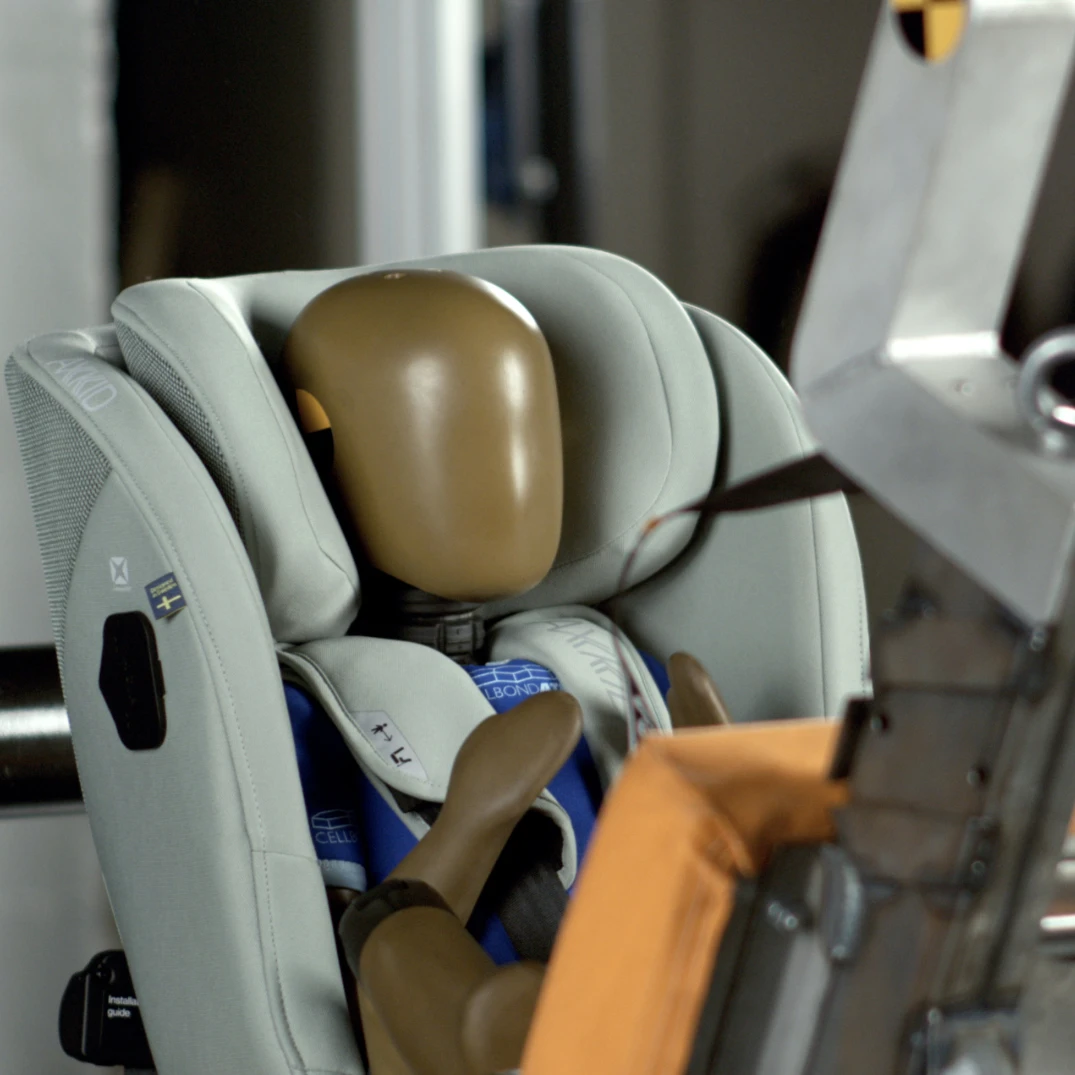
In 2025, ADAC introduced a new, stricter testing protocol to mirror realistic accident scenarios. includes a 6-ton SUV side-impact simulation, a rigid-wall frontal crash using a Kia Sportage body and expanded PFAS chemical checks.
For parents, it’s important to know that results from 2025 and beyond can’t be directly compared with earlier ADAC ratings. The new testing method raises the safety bar, which means scores may differ even for car seats that remain equally safe.
The ADAC Test is one of Europe’s most trusted and comprehensive child car seat safety evaluations, assessing crash performance, usability, ergonomics, and chemical safety. However, it doesn’t account for higher crash speeds, neck load limits, automotive testing, larger dummies or real misuse scenarios. Therefore, we test even more with the Swedish Plus Test and Axkid Internal Overtesting to ensure our seats perform even under the toughest and most unpredictable real-world conditions.
